
offpiste
An Arctic Journal : News from the North
A New EU Arctic Strategy: An Initial Look At the ‘Northern Neighbourhood’
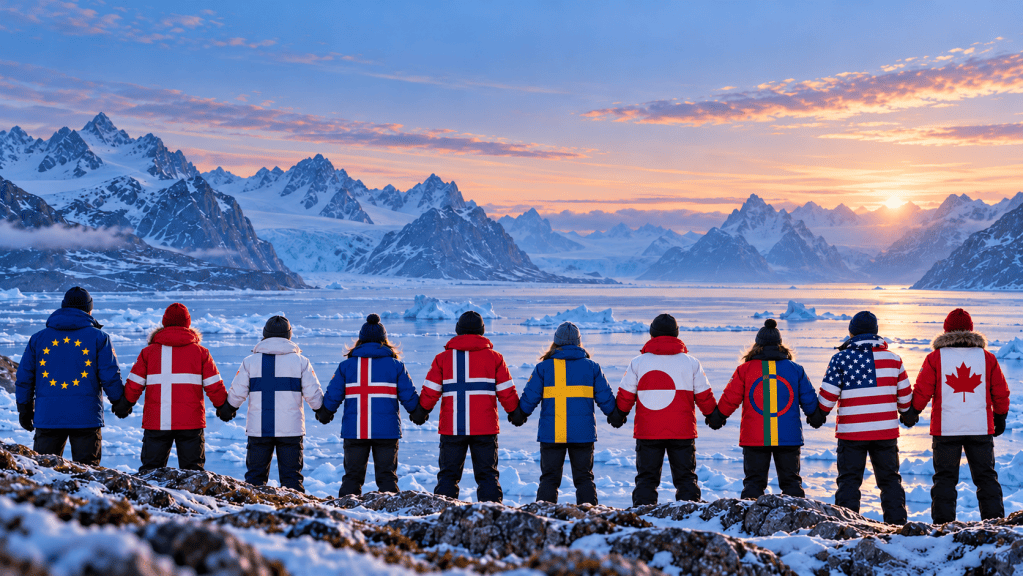
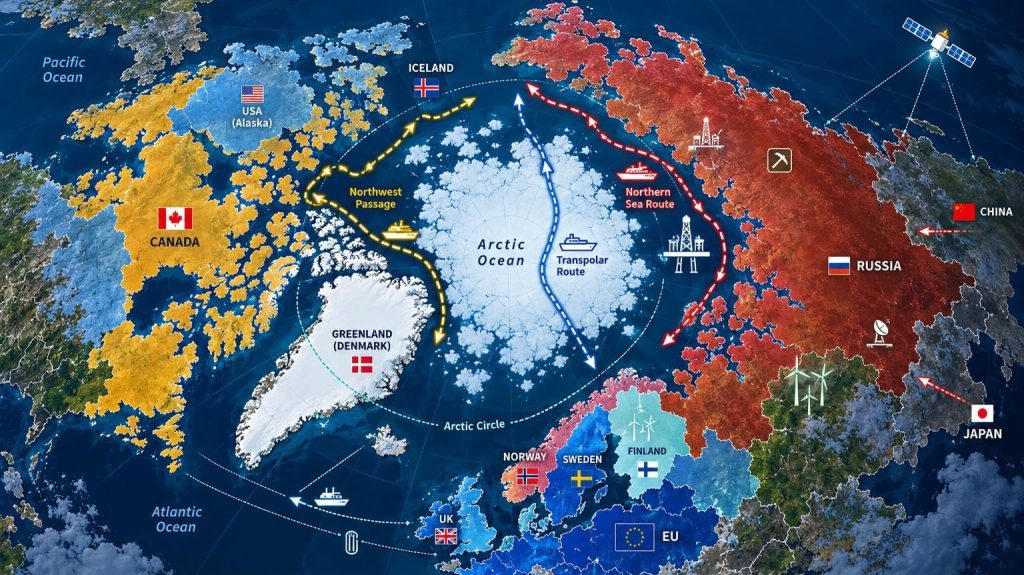
| On the 20th October 2026, the EU released its new, and much-awaited Arctic Policy, Europe’s Northern Neighbourhood: A New Strategy for the Arctic. The Joint Communication establishes a framework for closer cooperation with Arctic partners and other ‘like minded’ countries or communities. It describes the interconnectedness of the EU with the Arctic through security, economy, environment and shared histories. The strategy outlines four clear priorities; security and resilience, climate change, prosperity, and opportunities for people and communities. According to the report, around 500,000 EU Citizens are living in the Arctic, including the Sámi in Sweden and Finland, and Kalaallit (Inuit) in Greenland.1 The EU’s interest in the Arctic is not new. It has issued communications on the Arctic since 2008, when the European Commission published The European Union and the Arctic Region.2 The 2026 document is however the first to refer to itself as a ‘strategy’. This merits analytical attention as ‘strategy’ indicates a level of proactivity that ‘policy’ does not. However, commitment, and action are two different things, and the EU will need to action its priorities in order to make the title of ‘strategy’ a credible one. Three EU member states, Denmark, Finland, and Sweden are also Arctic States. Norway and Iceland are linked to the Union through the European Economic Area. Greenlanders are EU citizens as nationals of Denmark, but as an autonomous territory, Greenland has firmly rejected EU membership status twice on popular votes (1973, 1982), and does not participate in the EU single market. The question of whether the EU should have an Arctic policy or not is often questioned by academics and the media due to examples like Greenland. However, the EU is a part of the Arctic, and therefore the development of an EU-Arctic Strategy does feel intuitive. In a world where the race for resources is firmly in play, and countries like China refer to themselves as ‘near Arctic’3 states, it would be an oversight by the EU not to strategize around preparedness in the Arctic through policy development. Centering the ‘People Who Live There’ The Arctic has seen a political changing of the guard in terms of international policy commitments made towards it, and this new strategy arrived among a series of new political developments. The most serious development being the Greenland-Denmark-US agreement on North Atlantic Defence and Security signed in September, which eased heightening tensions in the territory, the new UK Policy to the Arctic, which shortly preceded the EU strategy. The strategy repeatedly centers the people of the Arctic, and local, indigenous knowledge. It makes commitments to strengthening dialogue between the EU and local communities, and support regional governments in their initiatives. This raises a bigger conversation around the relationship between regional government and international organizations, and whose say is final. Where one organization brings strength in numbers, investment, and international security and the other brings unparalleled regional awareness, and an accurate representation for local interest, it is hard to understand how both things can be prioritised without important nuance being overlooked. The relationship between the Arctic’s indigenous communities, and the international organizations that claim to represent their interests has at times felt disconnected in a way that would make the execution of this ‘strategy’ difficult. In June 2026 an update was published on the development of the EU Arctic Policy. In the report the Inuit Circumpolar Council (ICC) called on the EU to give special attention to the rights of Arctic indigenous peoples. The ICC highlighted a tendency of EU to interchange ‘indigenous peoples’ with the broader bracket of ‘local communities’.4 The EU’s priority with the new strategy is to establish a secure, peaceful, and resilient Arctic through increased surveillance, communication, and readiness in the context of an increasing Russian and Chinese presence in the region. There is also a desire to further communicate and align with NATO, which perhaps gives insight into how Europe feels about the nature of its own military readiness. |
| Shifting Priorities From The 2021 Policy? As a region, the Arctic is under a growing international spotlight, more so now than ever before. The key themes of the 2021 strategy5 are still at the forefront of the new one. There is a significant prioritisation of security and economic resilience in the 2026 policy that was not as strongly felt in the 2021 policy, which centered climate change. While the climate remains one of the 2026 strategy’s top priorities, there is a notable shift away from the emphasis placed on it in 2021. This can perhaps be seen most clearly in the Arctic hydrocarbon development. Where 2021 sought to pursue a binding multilateral prohibition on further Arctic hydrocarbon development, this has been dropped by the new policy. It maintains that Arctic coal and gas should ‘remain in the ground’, but the optimism behind the 2021 policy has been replaced in the 2026 policy by a focus on preparedness in a military, civilian and maritime capacity. The EU seeks to prepare the Arctic better militarily, to closely cooperate with NATO, expand maritime security initiatives, and mobilise an Arctic Cable Hub, as well as repairing submarine cables. While 2021 was about prevention and even included ‘practical’ cooperation with Russia, the 2026 policy embodies a clear move towards military strategy, and civil preparedness. Russia’s full scale invasion of Ukraine in 2022 undoubtedly changed the international security landscape – in the EU’s own words, ‘rendering the ‘High North, low tensions’ slogan obsolete.’6 However, this should not mislead policy makers down a path of self-interest, and it is essential that the EU demonstrate how both indigenous peoples and Arctic communities can be at the forefront of these choices. It is this question that should take priority over whether or not the EU should develop an Arctic policy or not. The EU evidently recognises the value of its Arctic ‘neighbourhood’ and it understands how essential working with Arctic communities is to the longevity of Europe and the EU as a whole. It will now be essential for the Union to follow through on this intention if the longevity of an aligned Europe on Arctic security is to be maintained. |
| To read the 2026 EU Strategy to the Arctic click here |
| 1 – Joint Communication To the European Parliament, The Council, The European Economic and Social Committee and the Committee of the Regions, Europe’s Northern Neighbourhood: A New Strategy for the Arctic. 2 – To read the 2008 EU Policy to the Arctic click here 3 – China’s Arctic Policy, The State Council Information Office of the People’s Republic of China, January 2018 4 – EU Arctic Policy Update, EPRS, European Parliamentary Research Service, Gabija Leclerc, Members’ Research Service, June 2026 5 – To read the 2021 EU Policy to the Arctic click here 6 – EU Arctic Policy Update, EPRS, European Parliamentary Research Service, Gabija Leclerc, Members’ Research Service, June 2026 |